
The complete guide
Hanging a bike without lifting it
The lift is why hooks go unused
Every garage has a bike hook screwed into a joist that has not held a bike since the month it went up.
The reason is always the same. Loading a conventional hook means taking the bike's entire weight above shoulder height, holding it there, and steering a wheel onto a small hook you cannot see properly. It is fine with a 9 kg road bike in good light. It is a genuine effort with a 15 kg hybrid, in a cold garage, in the dark, with wet hands.
So the bike gets leaned against the wall "just for today", and that is where it lives from then on.
Push, do not lift
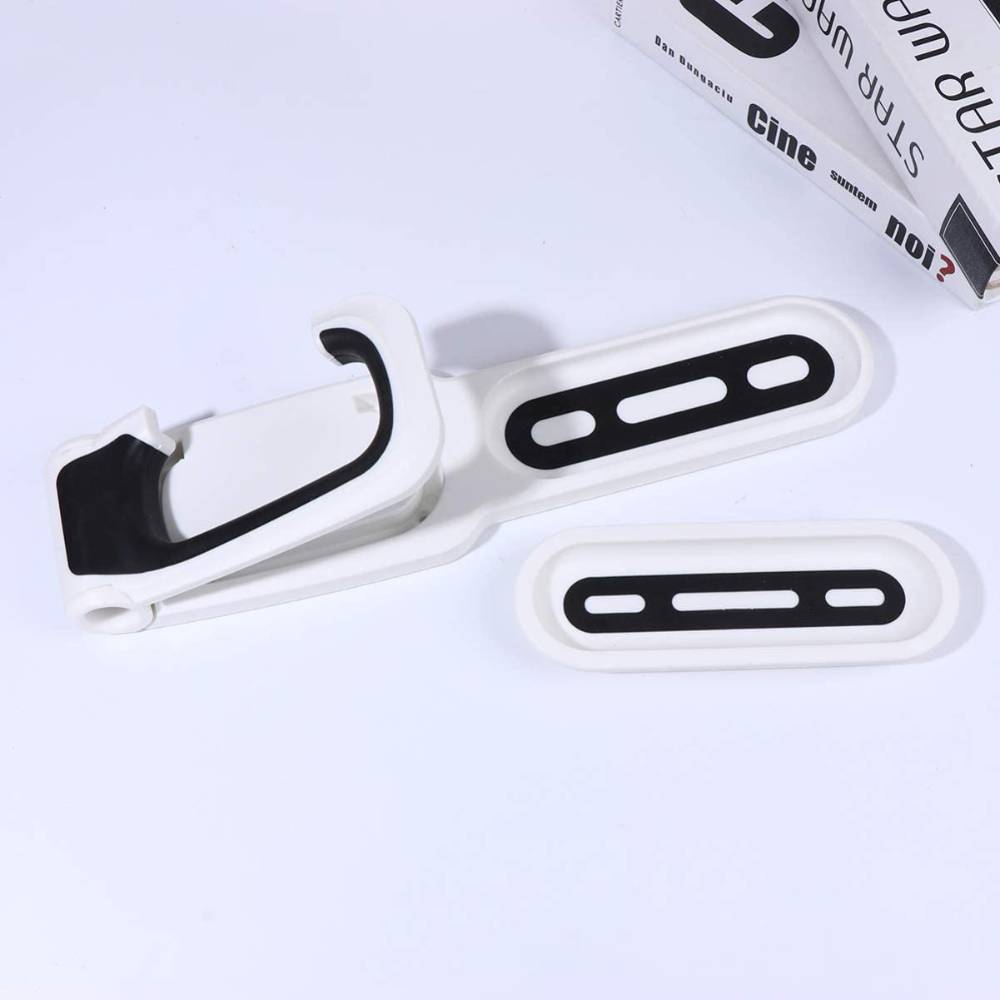
This hanger is loaded differently, and the difference is mechanical rather than marketing.
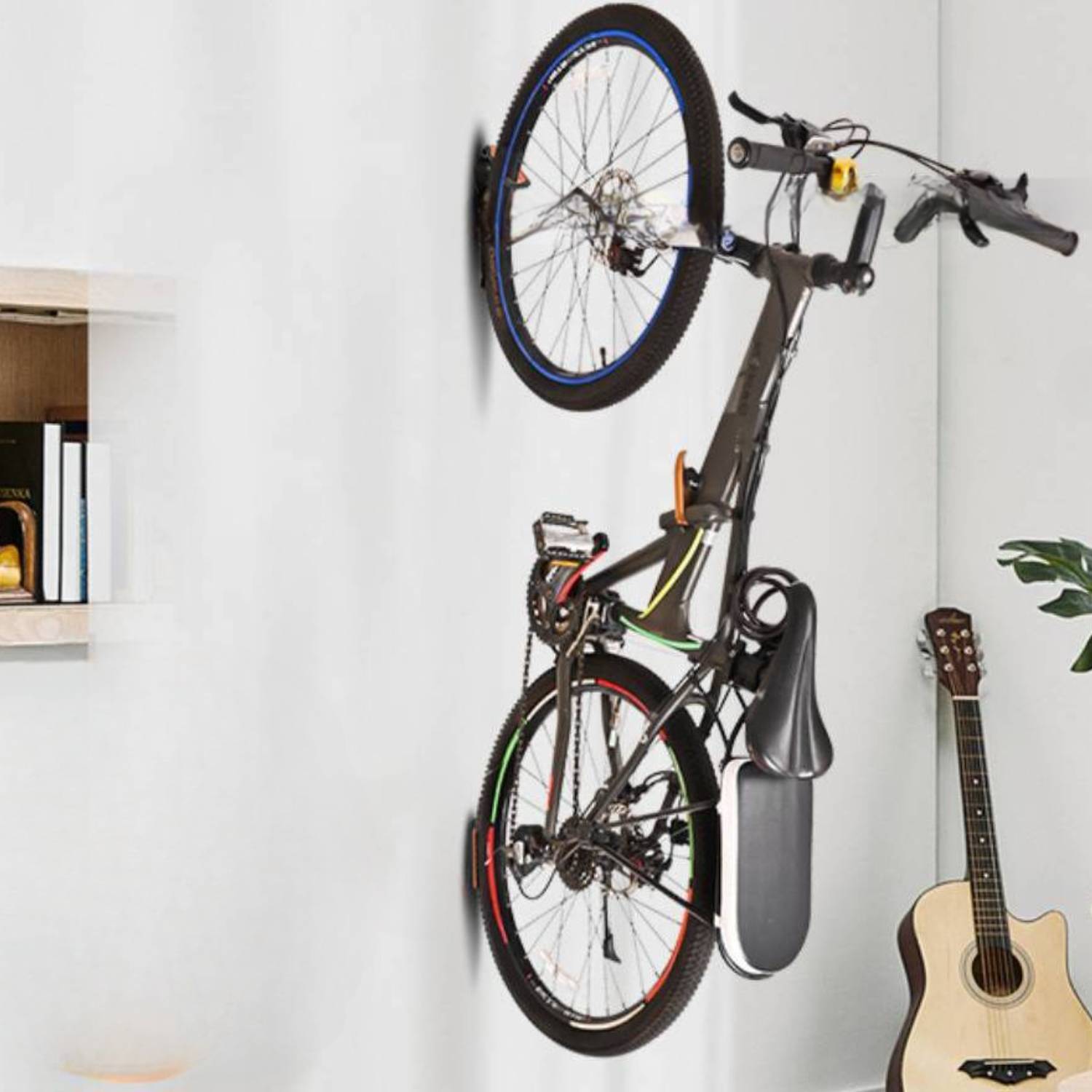
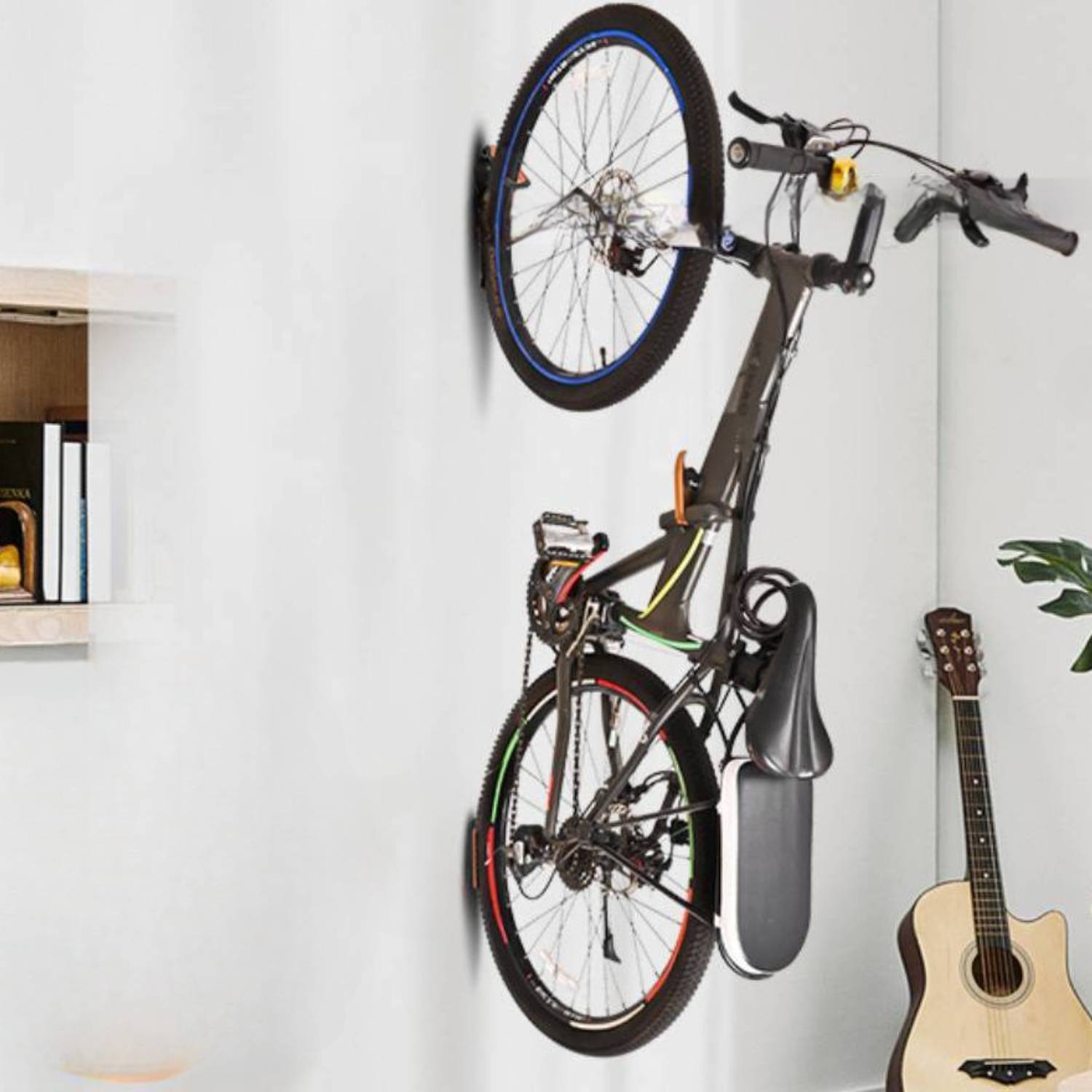
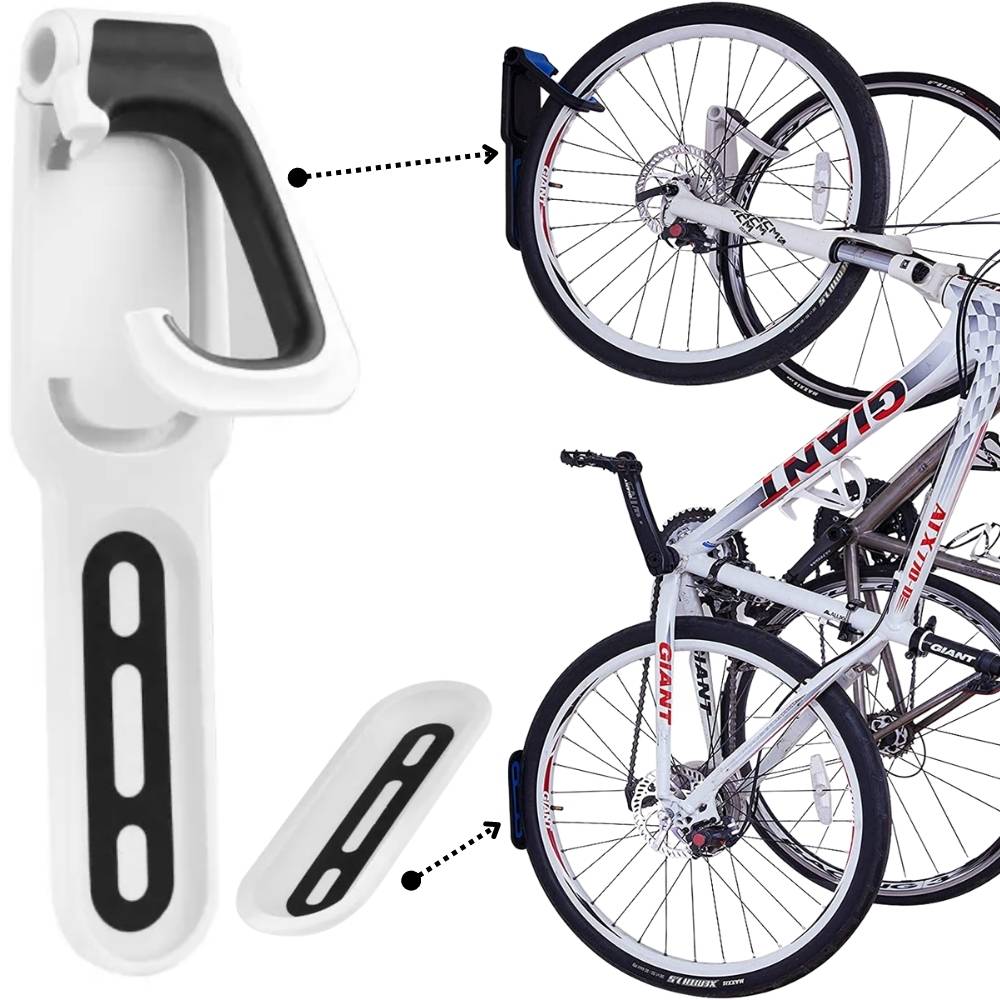
You lean the bike back so it balances on its rear wheel, roll it towards the wall, and push the front wheel up into the hanger. The floor carries the weight through most of that travel, and you are guiding rather than carrying.
The practical result is that it stays in use. It also means the person who puts the bike away does not have to be the strongest person in the house, which is the difference between a system that works for a family and one that works for one member of it.
Getting the height and angle right
Two adjustments decide whether it feels natural or awkward, and both are worth doing before you commit to holes.
Height. Too high and you are back to lifting. Too low and the rear wheel does not clear the floor. Hold the bike in the loading position, push it up as if the hanger were there, and mark where the wheel naturally wants to sit.
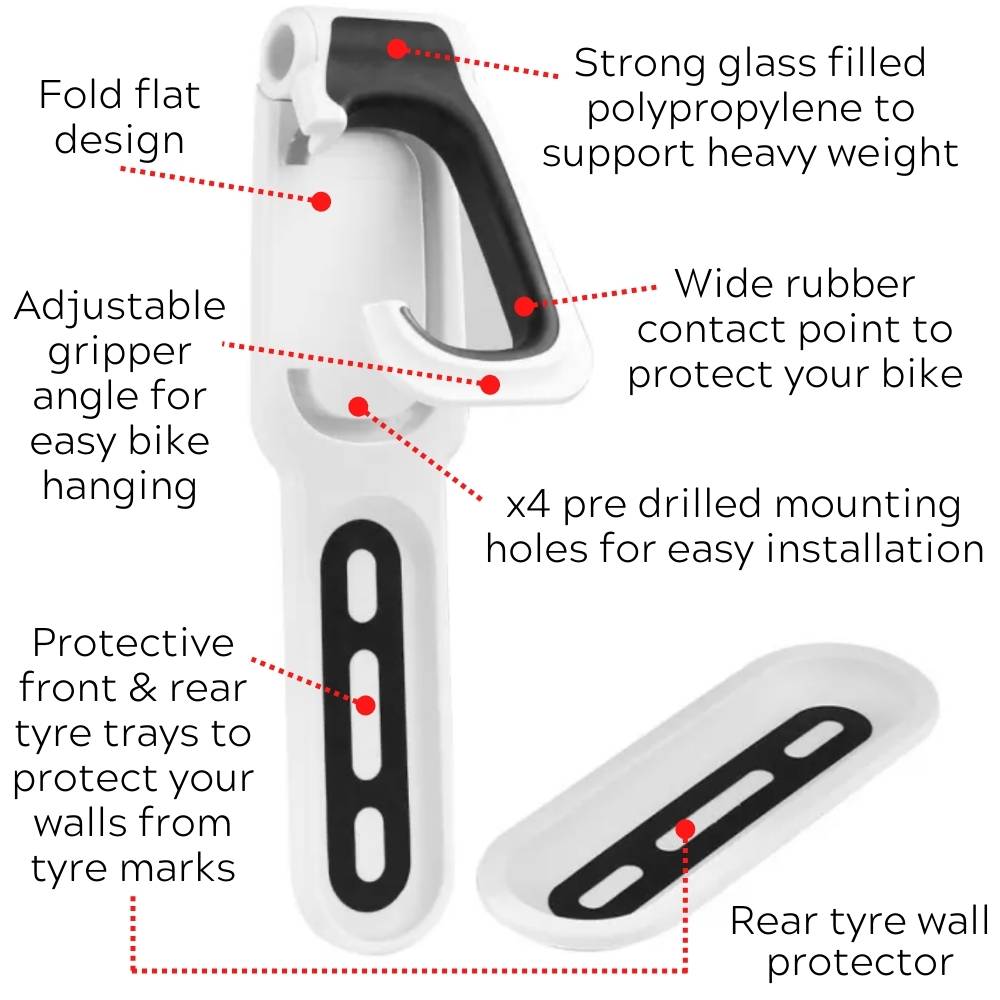
Angle. The hook angle adjusts, and it controls how close the bike sits to the wall and whether a pedal fouls the skirting board or a shelf. Set it with the bike in place, not from the packaging.
Ten minutes on those two things is the difference between a hanger you use daily and one you fight.
The wall does the work
A 30 kg rating describes the hanger. The load still ends up in the wall.
Solid masonry with the right anchors is straightforward. A timber stud wall works if the fixing lands in a stud, which means locating it rather than guessing. Plasterboard on cavity anchors alone is not a suitable host for a bike, regardless of what the anchor packet claims.
That is worth settling before the drill comes out, because the failure mode is a bike coming off a wall.
One hanger, or three, or five
The single hanger is the right buy for one bike, and the packs exist because the same fitting repeated is how most people end up storing several.
If you already know there are three bikes, the three pack is the cheaper route and the spacing decision gets made once. If you are not sure yet, start with one, learn where it wants to be, and add more knowing exactly how much width each bike takes.
One thing worth knowing if you do add more: alternate the bikes nose up and nose down. Handlebars and pedals sit at opposite ends, so alternating lets each wide part sit beside a narrow one and the bikes pack considerably closer.