

The complete guide
Getting more out of a wardrobe with one rail
Wardrobes are built for the wrong clothes
Almost every fitted wardrobe is a rail and a shelf above it, which assumes most clothes should hang. A good number should not.
Knitwear is the clearest case. A jumper on a hanger carries its own weight from two points at the shoulder, and over a season it stretches there. Take it off the hanger and the shoulders have small peaks in them that a wash will not fix.
Folded trousers slide. T-shirts on hangers take up four times the width they need. Bags and shoes have nowhere to go at all, so they end up on the wardrobe floor under the hanging clothes.
Turning rail into shelves
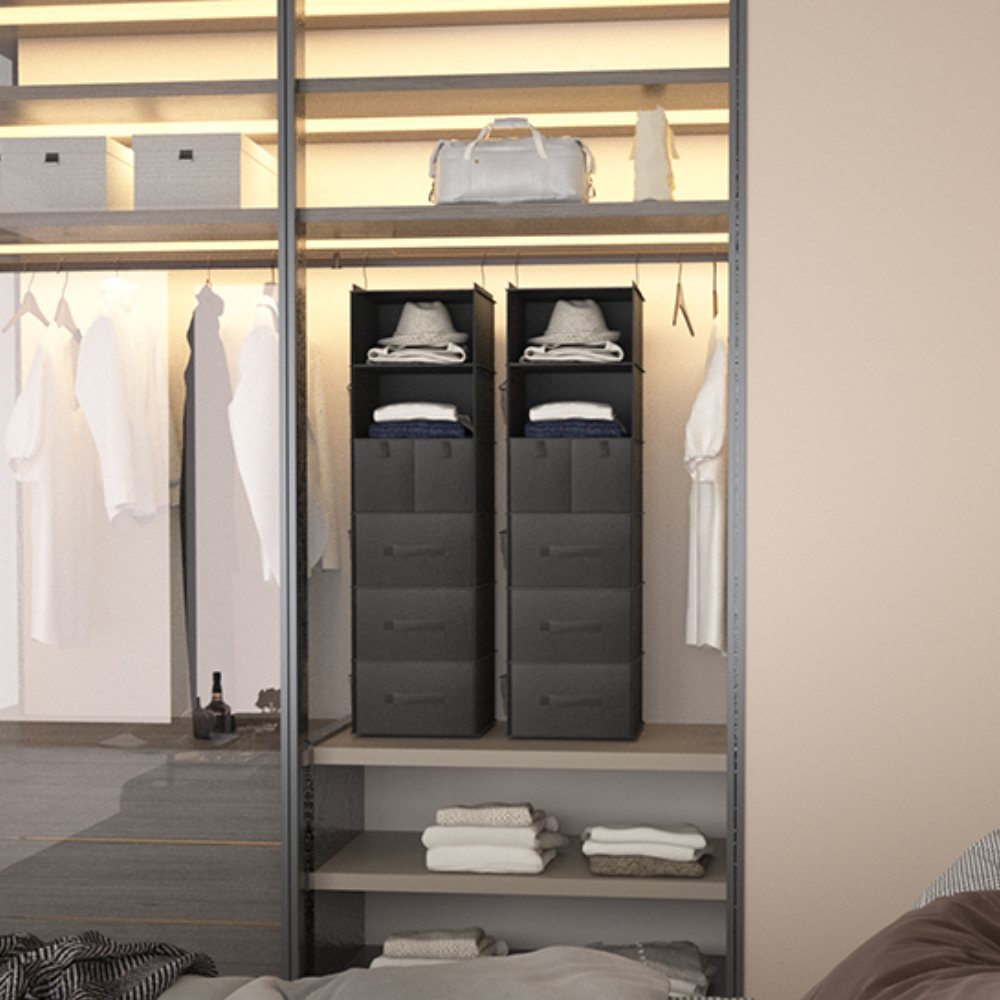
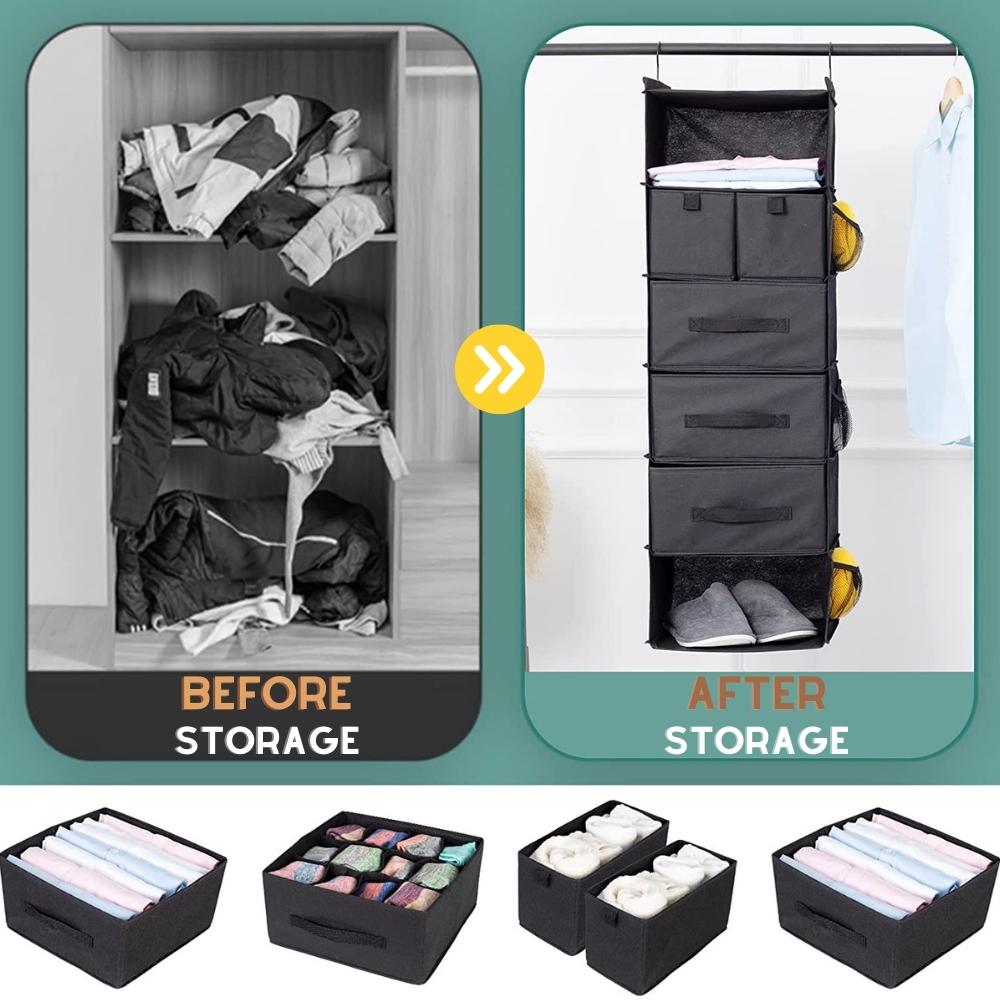
Hanging shelves are a way of converting a section of rail into the storage the wardrobe should have had.
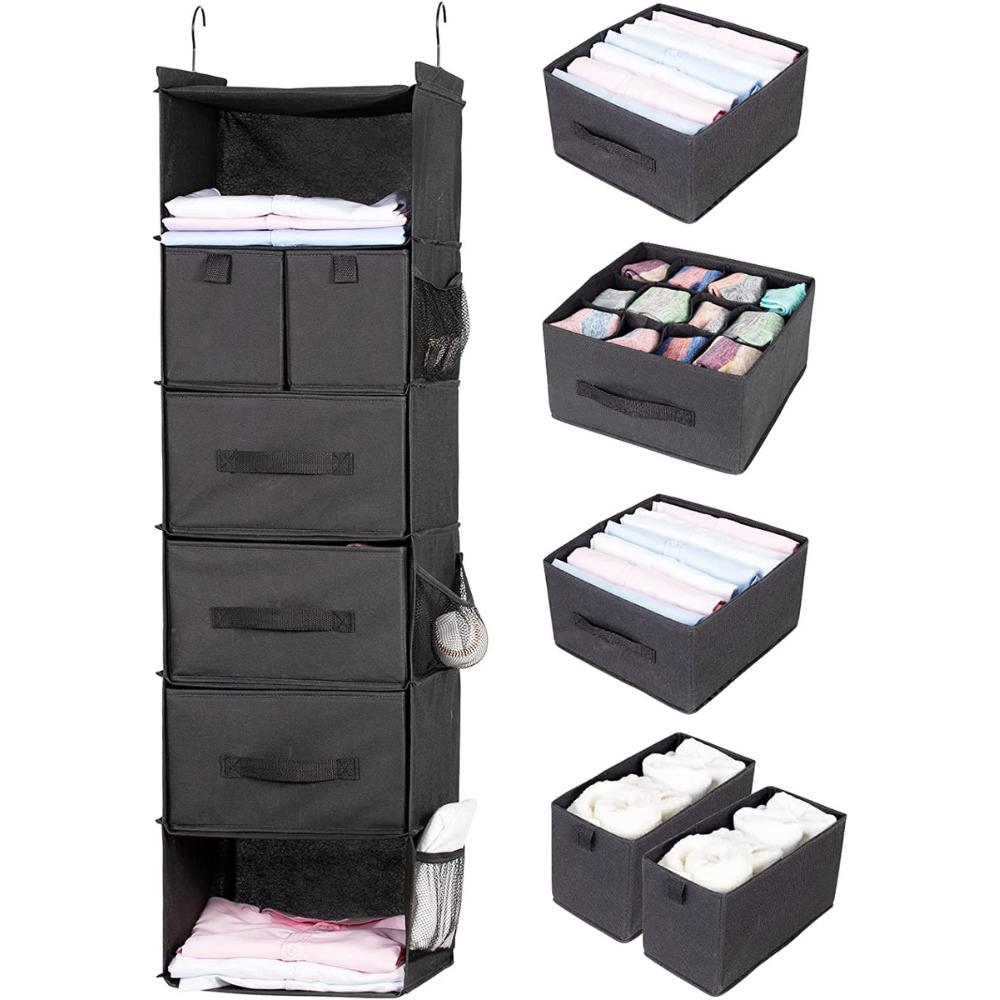
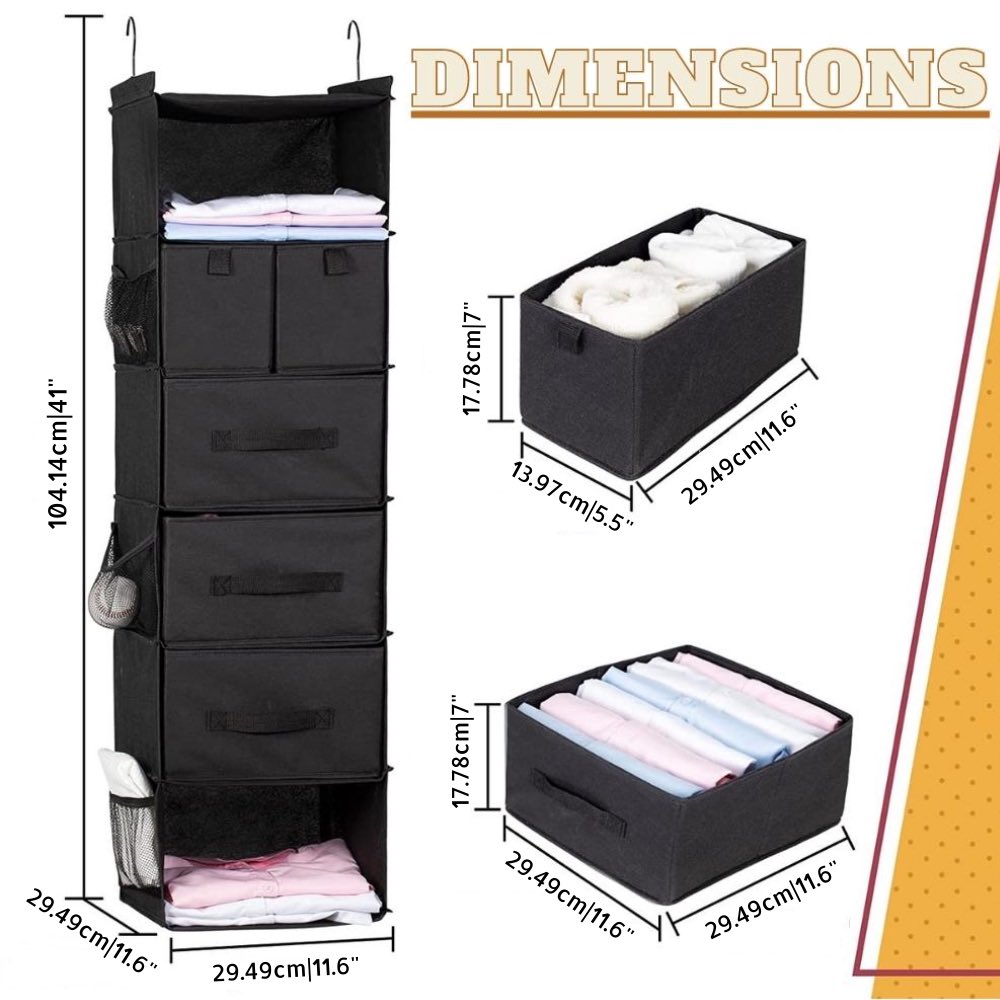
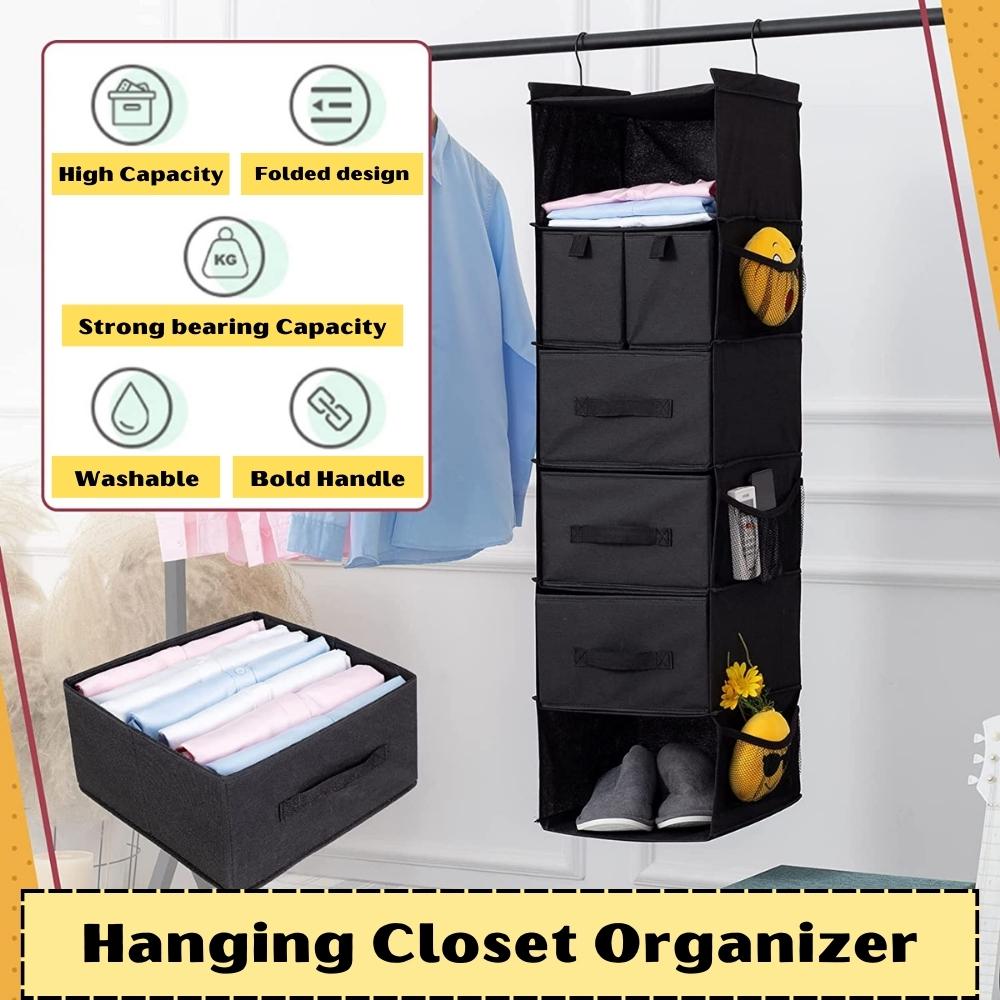
The rail takes the load, which is why nothing is drilled and nothing is assembled. You hang it, and a vertical space becomes six or so flat ones.
The trade is width. The organiser occupies a stretch of rail that used to hold hanging clothes, so it works best at one end rather than in the middle where it splits your hanging space in two.
Why the plates matter
The difference between a hanging organiser that lasts and one that becomes a fabric sack is entirely in the stiffening.
Fabric alone cannot hold a shelf flat. Load a compartment and it settles into the one below, and once that starts the whole column droops and the shelves stop being shelves.
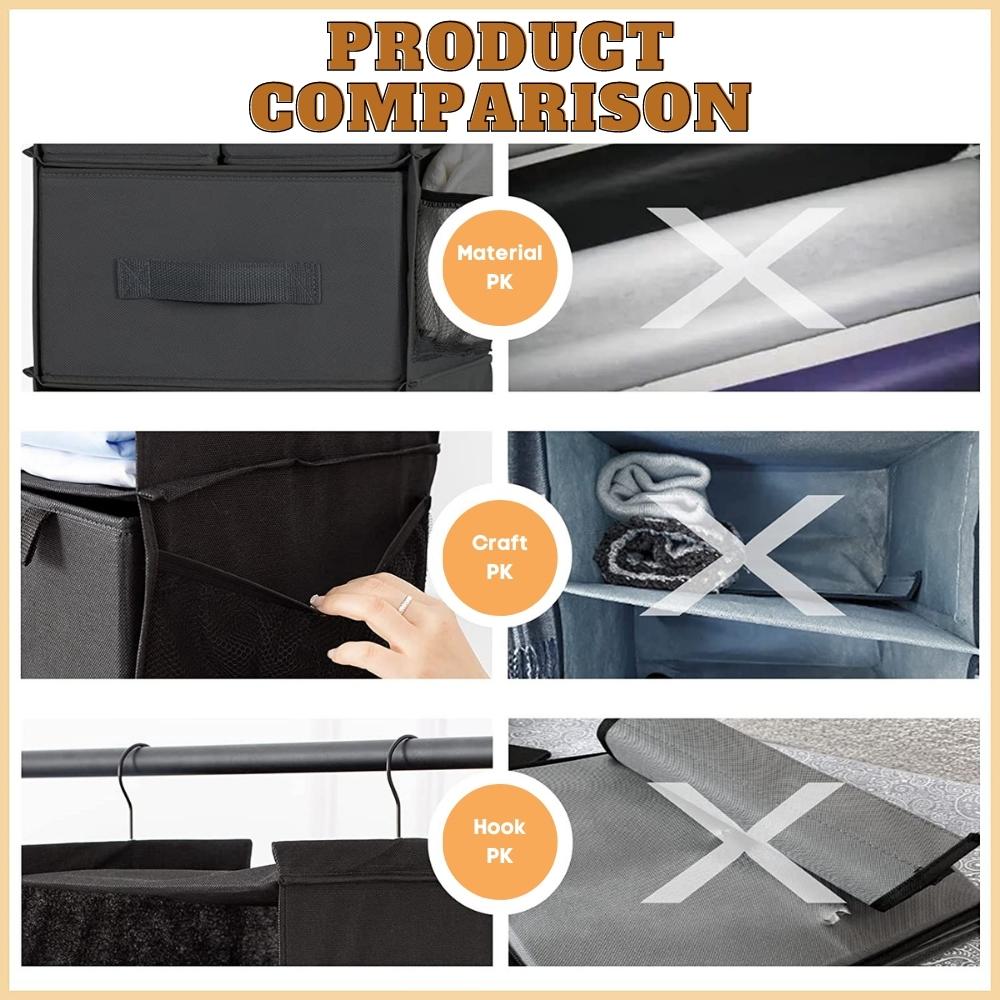
The plastic plates inside each shelf are what keep them flat under load. It also means the thing to avoid is machine washing, because that is what distorts them, and a wipe with a damp cloth does the job.
Breathable, not sealed
There are two ways to store clothes you are not wearing, and they suit different situations.
Sealed storage, like a vacuum bag, keeps everything out and squeezes the volume down. It is right for a season's worth of bulky bedding going under a bed for six months.
Breathable storage lets air move. It is right for the wardrobe, where clothes are in rotation and the enemy is not dust so much as that shut-in smell that plastic gives everything after a month.
This is the breathable kind, which is also why it is honest to say it will not stop moths. It keeps dust off. A closed barrier it is not, and if you have had moths, the answer is a repellent in the wardrobe, not a fabric shelf.
What to put where
A small habit makes the whole thing work better.
Shoes and bags go in the bottom compartments. Anything shoes bring in from outside then falls downwards onto the wardrobe floor rather than onto folded clothes.
Jumpers and knitwear go in the middle, at the height you can see into without crouching.
The top compartment is the one people misuse. It is the hardest to see into, so it should hold what you need least often, not the thing you reach for daily.