
The complete guide
Why drawer size matters more than drawer count
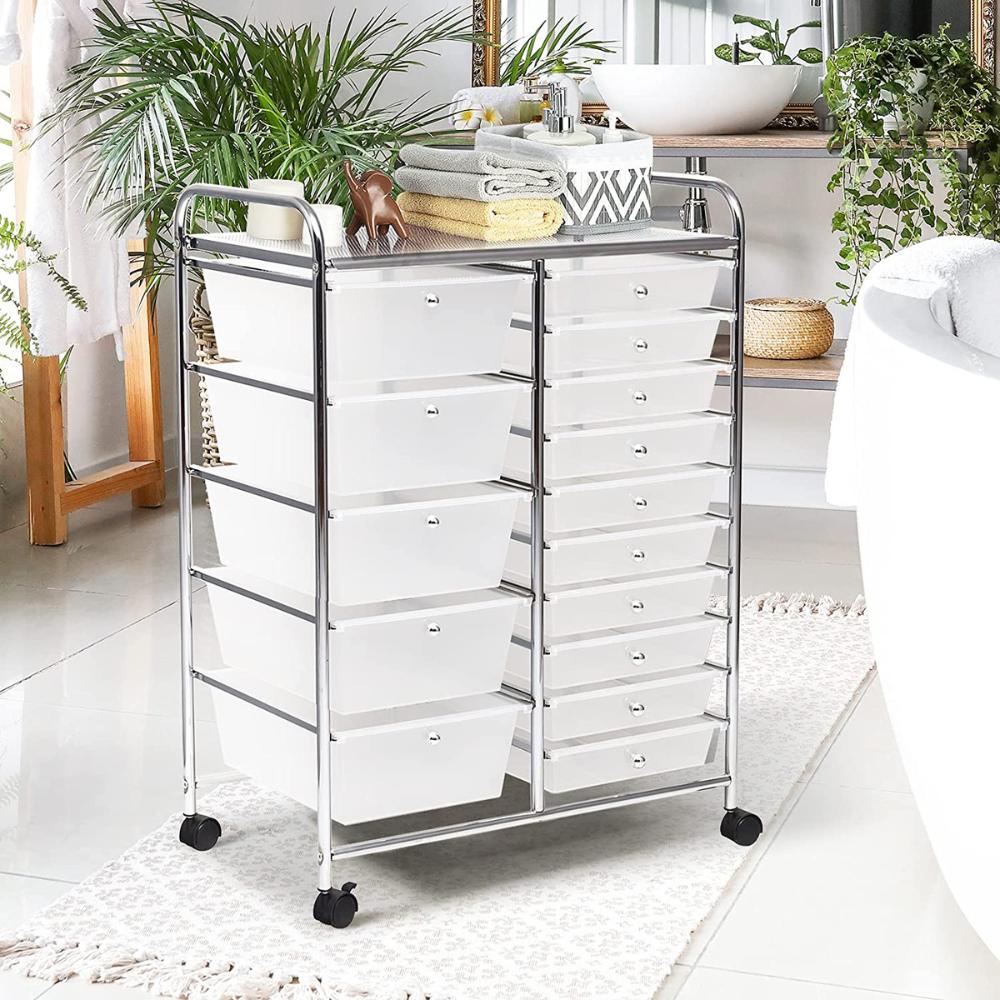
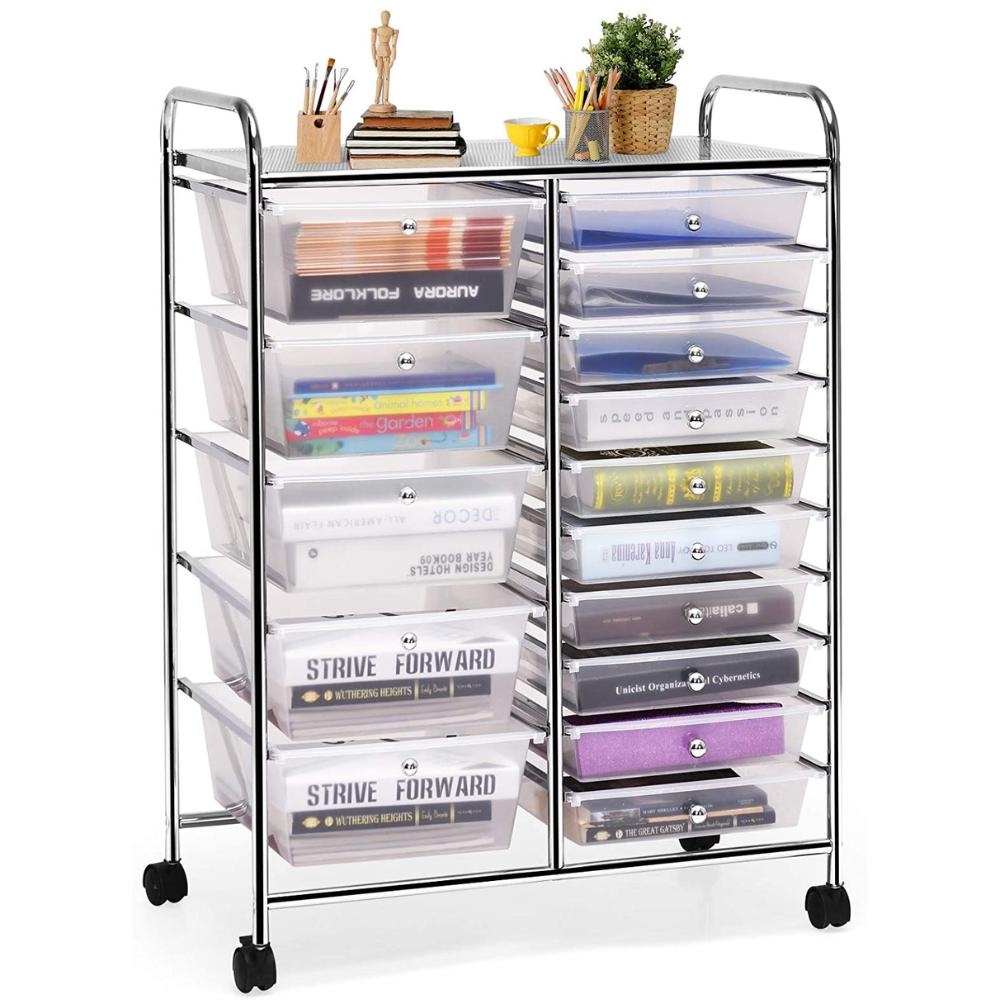
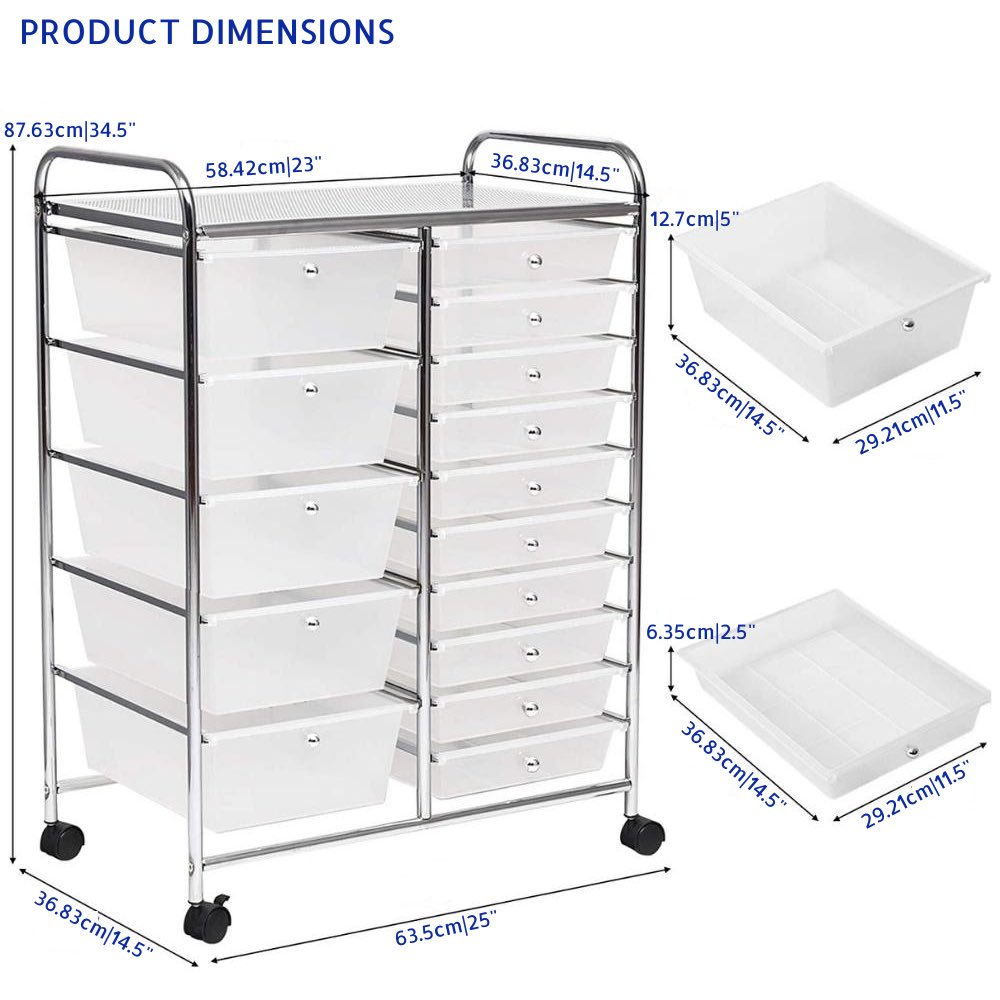
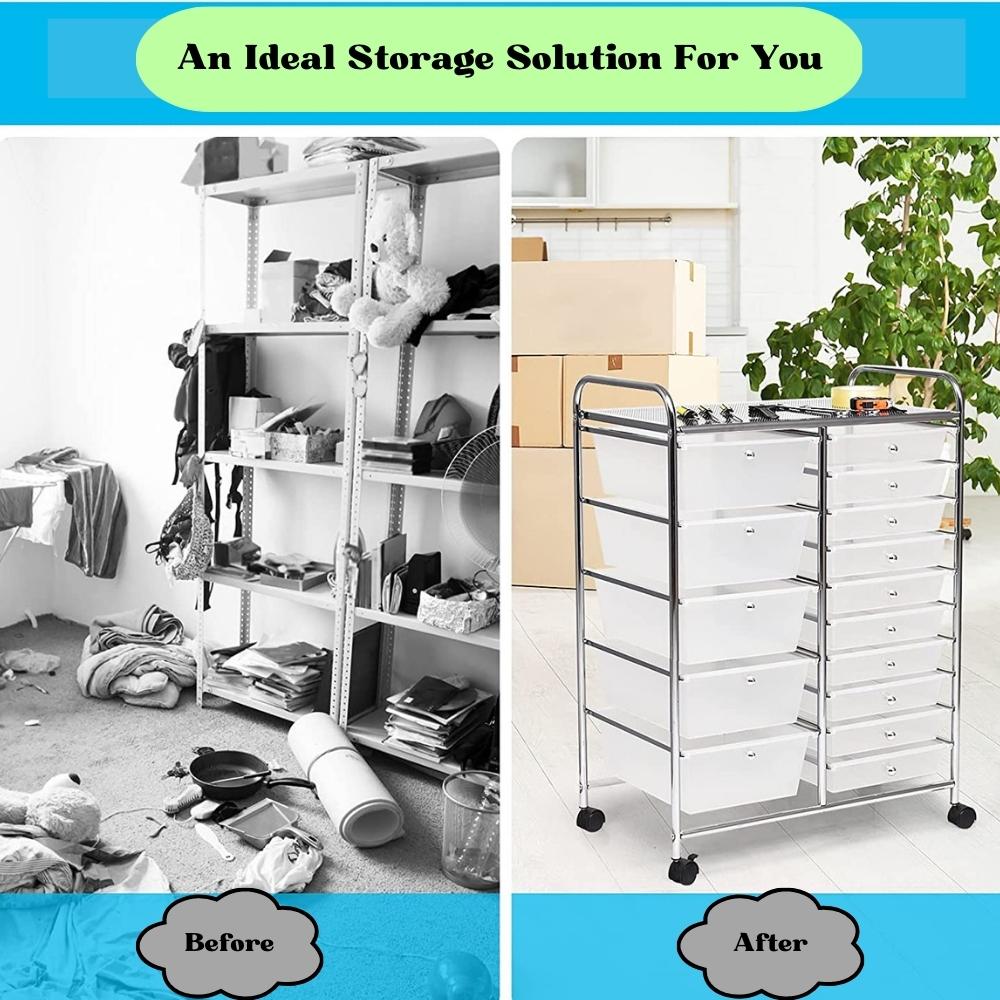
Fifteen drawers, two sizes
Most drawer units offer one size repeated. That looks like more choice than it is, because the contents of a home office are not all one size.
Reams of paper, boxed supplies, folders and palettes are bulky. Pens, clips, batteries, memory sticks, brushes and lipsticks are small, and they behave completely differently in storage.
Put the small things in a deep drawer and they migrate to the bottom, under whatever went in later. You end up tipping the drawer out to find a memory stick.
Five deep and ten shallow means each kind of thing gets the drawer it suits. That is why the split matters more than the total.
Assigning the drawers before you fill them
Worth ten minutes when the cart arrives, and it decides whether the thing is still tidy at Christmas.
Take the ten small drawers and give each one a single category. Not "stationery", which is four categories pretending to be one, but pens, clips, batteries, adhesives, and so on. The narrower the category, the less thinking it takes to put something away, and putting away is where these systems succeed or fail.
The five deep drawers take the bulk, and they are also where the awkward things go: chargers with cables, boxed sets, anything with an odd shape.
Keep the heaviest deep drawer at the bottom. That is not about strength, it is about how the cart behaves when you pull a drawer out sharply.
Brakes, and using them properly
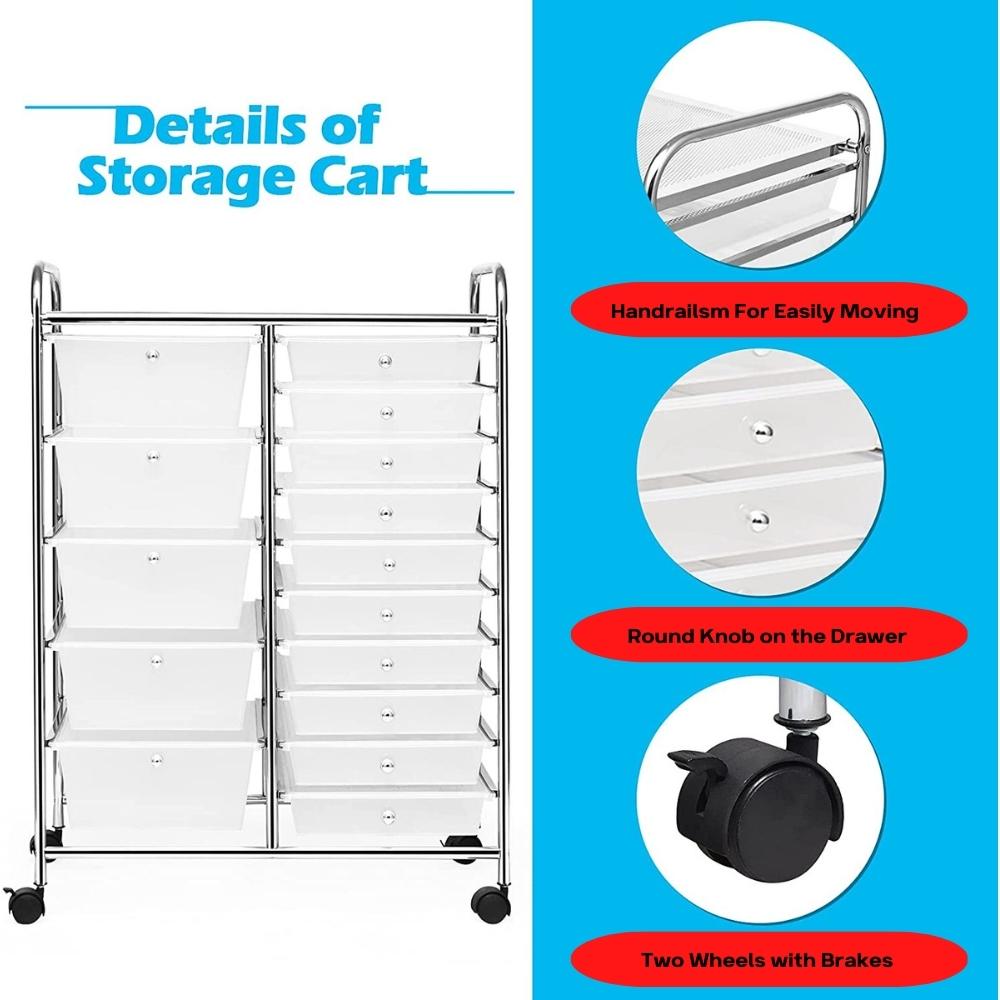
Two of the four casters have brakes, and there is an interlock to steady the frame.
The habit worth forming is releasing them before you move it. Shoving a cart against a locked caster is what flattens the wheel and wears the housing, and it is the most common way a rolling cart stops rolling well.
Brakes on, however, whenever it is parked somewhere it might be leaned on: beside a desk chair, in a classroom, next to a bed.
And a distinction worth being clear about: the brakes stop the cart moving. They do not lock the drawers. Nothing confidential or hazardous belongs in a cart with fifteen unlocked drawers in a shared room.
Looking after the floor
Smooth caster faces are specified so the cart does not scratch what it rolls on, which is the right design for a home office over a wooden or laminate floor.
What defeats that is grit. A small stone or a fragment of something hard gets caught in the caster and turns a smooth wheel into a cutting edge, and it will score a floor in one pass across the room.
Tip the cart back and look at the wheels every so often, particularly if it has been anywhere near a hallway or a garage. Ten seconds, and it is the difference between a floor that stays unmarked and one that does not.
The top is a surface
A lot of people put a cart like this beside a desk and treat the top as a lid.
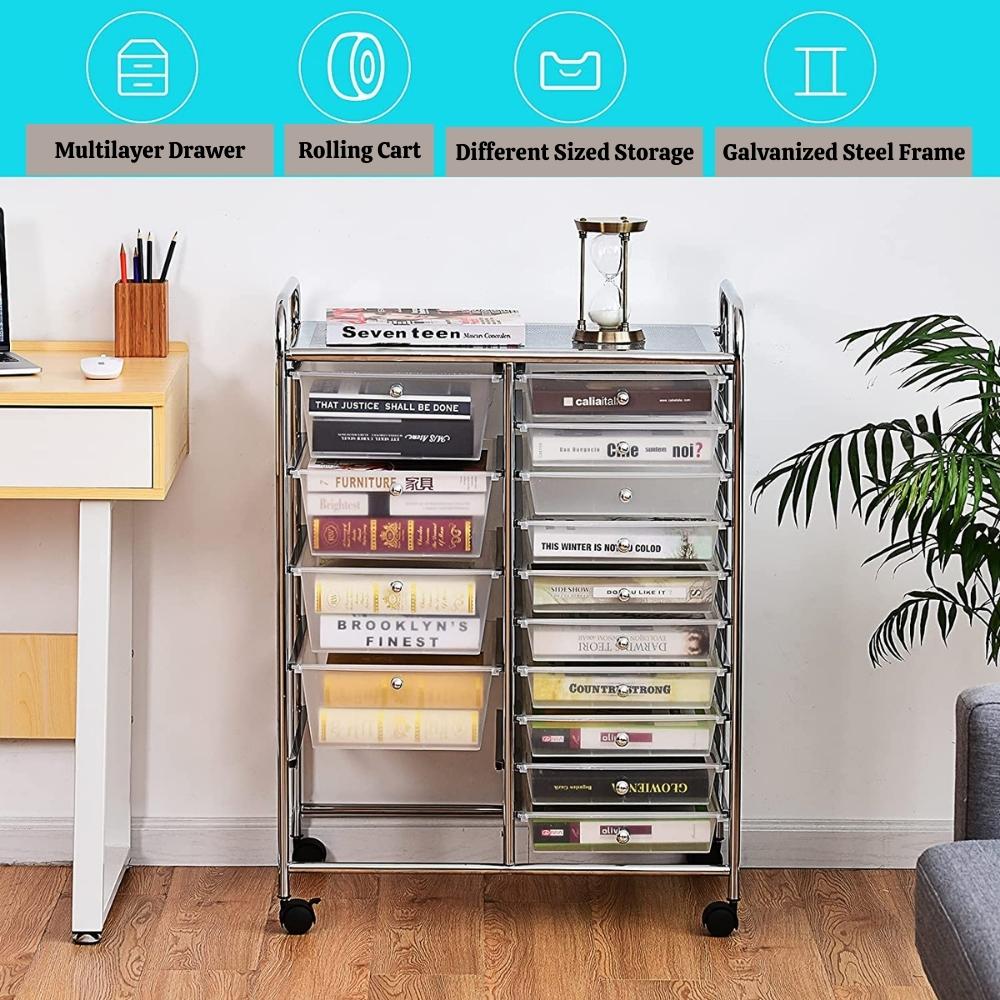
It is meant as storage space. In a small home office, that extra surface is often the most valuable part of the cart: somewhere for a printer, a lamp, a stack of what you are working on today.
If you are going to use it that way, park it with the brakes on and put the heavy drawers at the bottom, so the whole thing stays planted when you reach across it.