

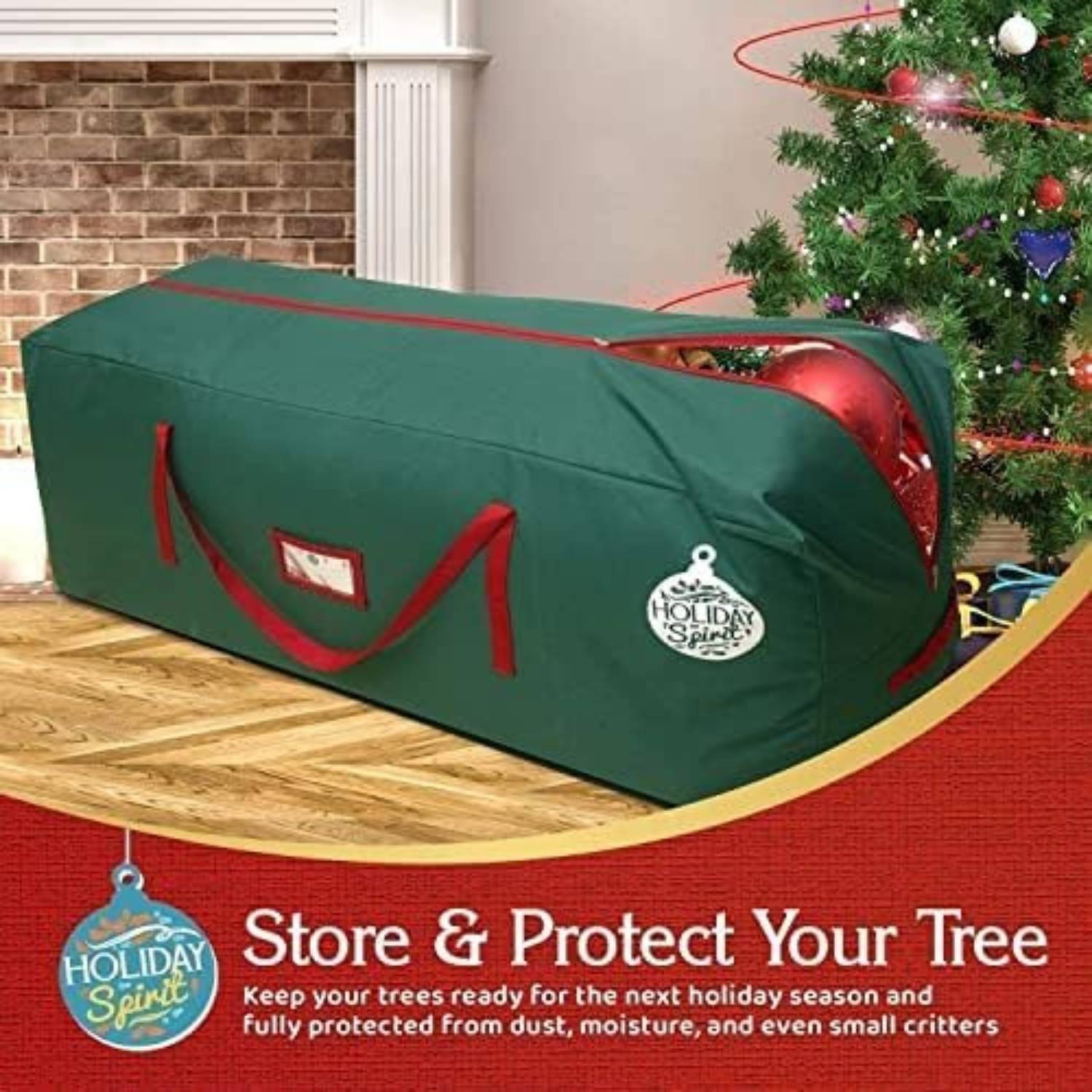



The complete guide
Packing an artificial tree so it lasts a decade
Eleven months matter more than one
An artificial tree is judged on how it looks in December, but almost everything that happens to it happens in the other eleven months.
Branch tips that have been compressed for a year take a set. Dust that settles on a tree in an open loft does not shake off, it works into the needles. Damp that gets into cardboard transfers into whatever the cardboard is touching.
None of that is dramatic, which is why it goes unnoticed. It just means a tree that looked full in year one looks tired by year four, and the usual conclusion is that it was a cheap tree.
The original box is not storage
Every artificial tree comes in a box, and that box was designed to survive one journey on a pallet.
It is not designed to be opened and closed ten times, to be dragged across loft joists, or to spend years in a place that condenses moisture every cold night. The corners split first, then the flaps tear, then the tree is effectively stored in an open tray.
Once that has happened, dust and compression do the rest.
Dismantle properly, then pack evenly
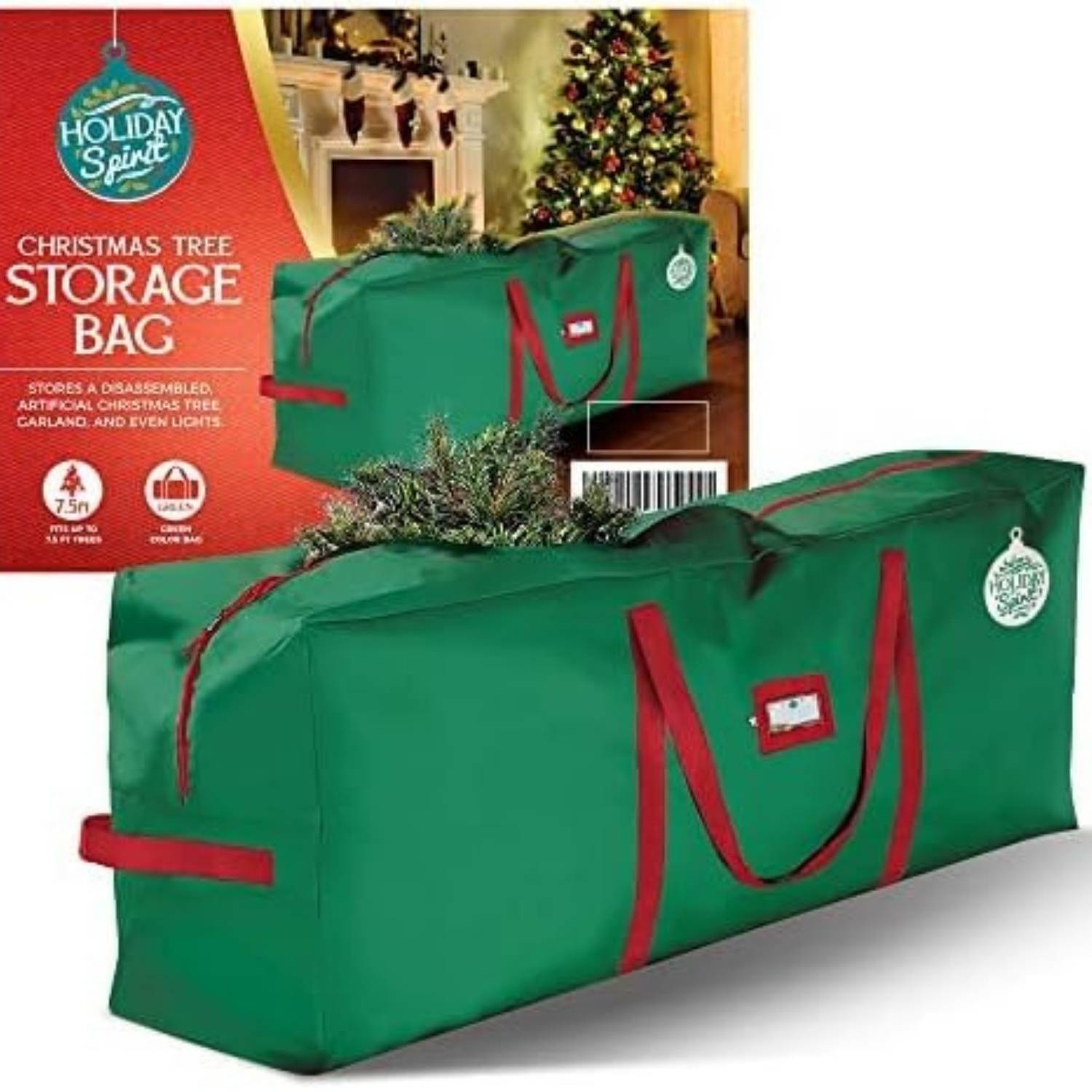
The bag is sized for a tree that comes apart, so the packing is what determines whether it fits comfortably or has to be forced.
Take the sections apart and fold each one's branches in towards the trunk. It feels wrong the first time, because it looks like you are bending the tree, but hinged branches are designed to do exactly that and it is far kinder than storing them splayed.
Lay the sections along the length of the bag rather than stacking them across it. Sections lying flat and parallel take up much less room than the same sections at angles, and it is usually the difference between a zip that closes easily and one that has to be pulled.
Dry, always
The one rule that ruins a tree if it is broken.
If the tree has been anywhere damp, or if it was near a door in wet weather, let it dry completely before it goes in the bag. A waterproof bag keeps water out and it will keep it in just as effectively.
The result of packing damp is a smell that has had eleven months to develop, and in a bad case mildew on the fabric of the branch wraps.
Where to put it
Lofts and garages are both fine, with one caveat each.
In a loft, keep it off the joists and away from the coldest edges of the roof, where condensation forms first. On boarded floor is ideal.
In a garage, keep it off a concrete floor. Concrete draws damp, and a bag sitting on it all winter will feel it. A shelf, a pallet or a couple of battens under it solves the problem entirely.
And in both: do not stack heavy boxes on top. The bag protects against dust and damp; it cannot protect against weight, and compression is the thing that flattens branch tips permanently.