
The complete guide
Laying out a wall of bikes
Why a track instead of hooks
The cheap way to hang four bikes is four hooks screwed into the wall. It works, and it locks in a decision you made before you had ever hung a bike there.
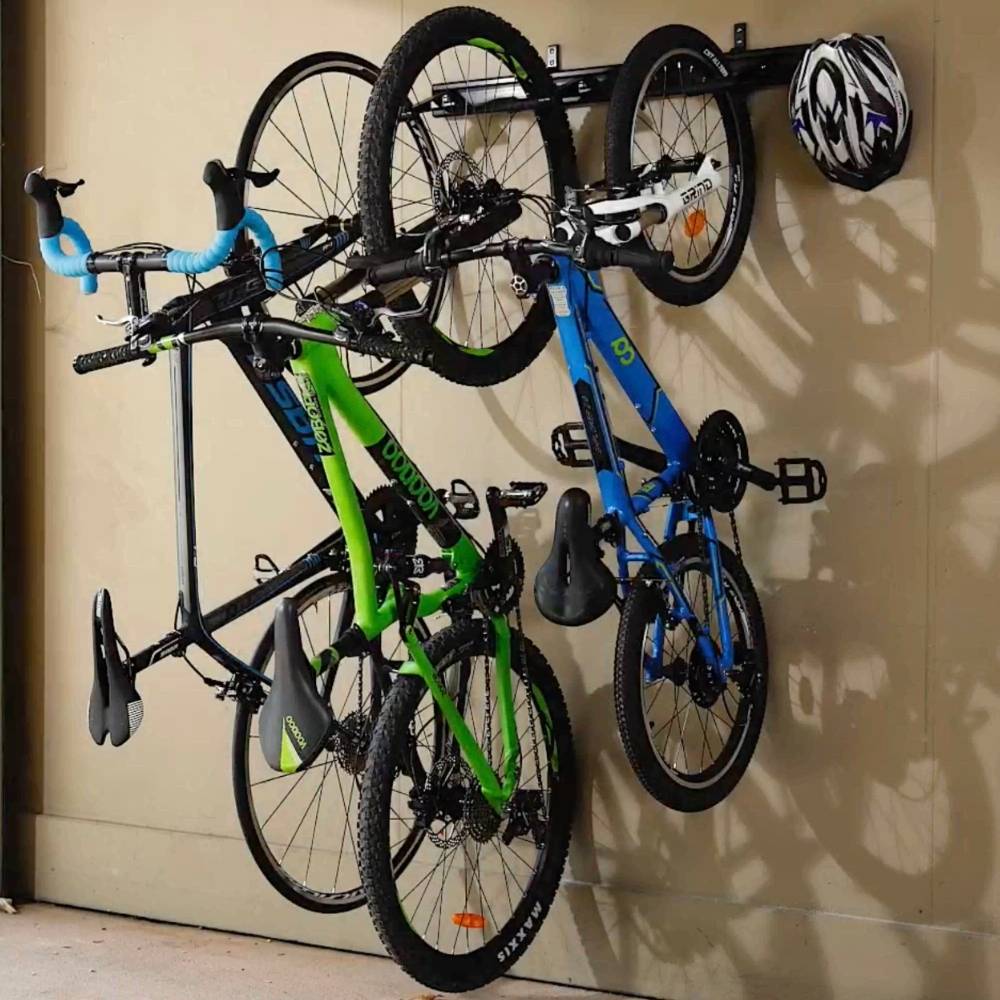
Bikes are not evenly sized. A road bike is narrow at the bars and light. A mountain bike is wide, a child's bike is short, and a hybrid with a rack and panniers is bulkier than any of them. The spacing that suits the four bikes you own today is not the spacing that suits the four you will own in three years.
A track moves that decision after the drilling. You get the rail level and solid, then slide the hooks to where the bikes actually want to be, and you can change it in a minute when a bike changes.
Alternate the direction
The single trick that fits more bikes into the same rail.
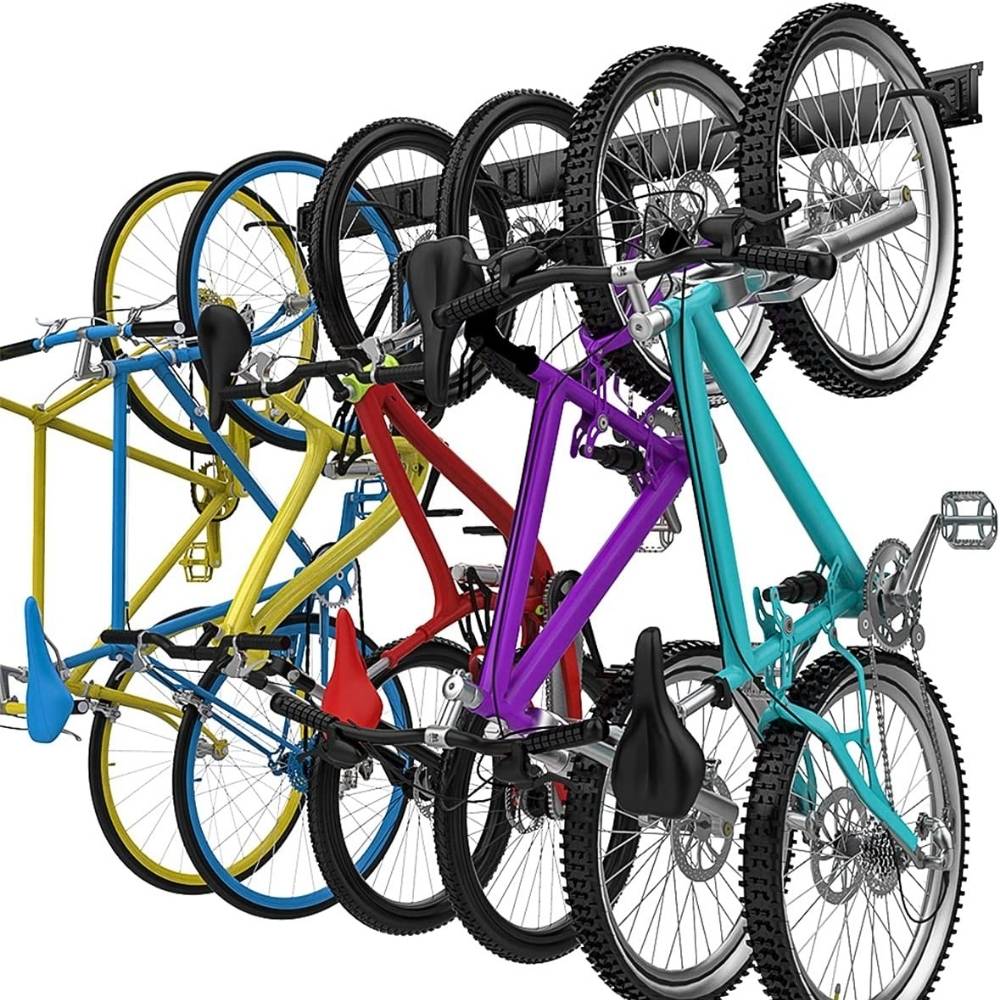
Bikes are widest at the handlebars and at the pedals, and those are at opposite ends. Hang every bike the same way up and every pair of handlebars competes for the same space.
Hang one nose up, the next nose down, and the wide part of one sits beside the narrow part of its neighbour. On four bikes that routinely saves enough width to matter, and it stops pedals from tangling.
Getting the height right
Two constraints, and they pull against each other.
High enough that the bottom wheel clears the floor, so you can sweep under it and the tyre is not sitting in whatever runs across a garage floor in winter.
Low enough that lifting the wheel onto the hook is comfortable. This is the one people get wrong, because a track mounted at a satisfying height on the day feels much less satisfying in February with a wet, muddy bike.
Hold your heaviest bike against the wall and lift the front wheel to where the hook would be. If that feels like an effort in a warm garage with a clean bike, it will not get used.
The wall matters more than the rack
Four bikes is a real load, and every bit of it goes through the fixings into the wall.
Solid brick or block with proper masonry anchors is straightforward. Timber studs are fine if the fixings land in the studs, which means finding them rather than assuming. Plasterboard with only cavity anchors is not a suitable host for this, and no rack can compensate for that.
If you are unsure what your wall is made of rather than which screw to buy, that is worth resolving before you drill, not after.
Looking after the wheels
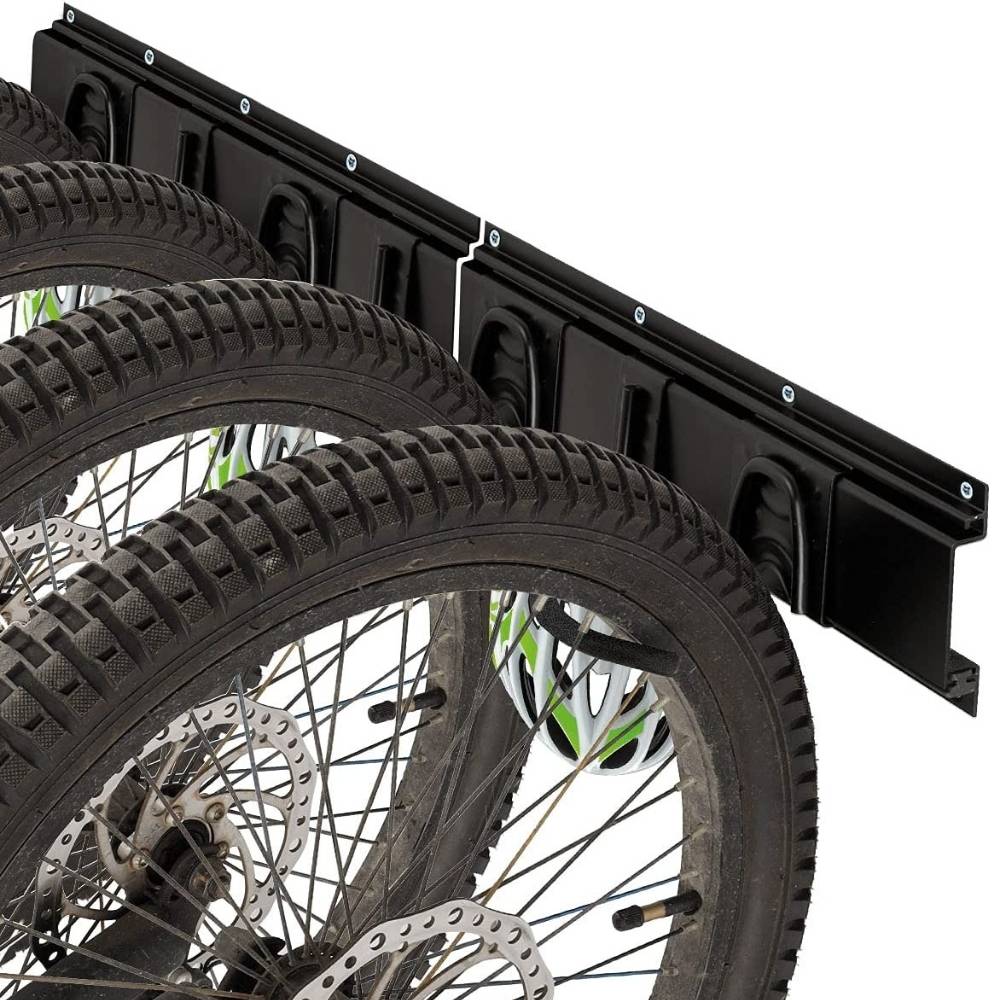
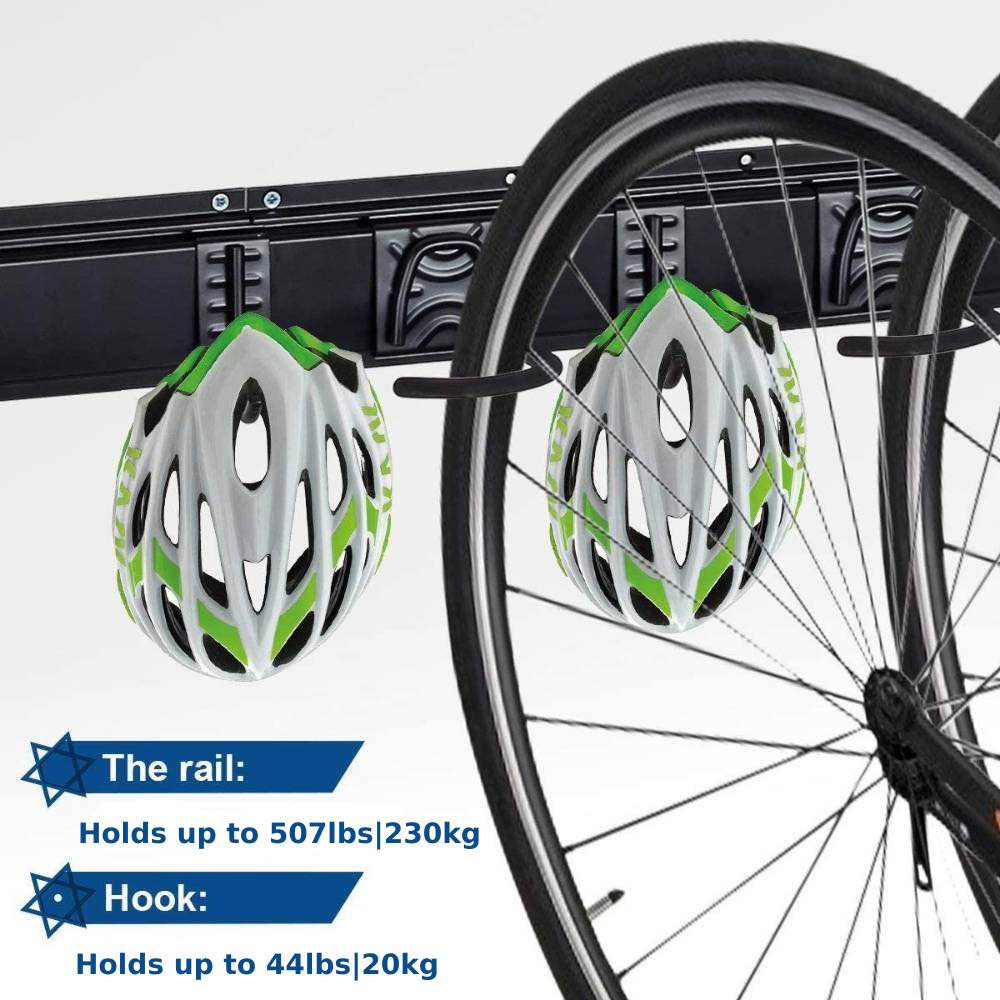
The hooks are rubber coated so the wheel is held without the rim or spokes taking the load, and that handles the mechanical side.
What is left is grit. A hook that has picked up sand and road salt has an abrasive surface, and every time a wheel is lifted on and off it, that gets dragged against the rim.
Wiping the hooks occasionally, particularly through winter, is a two minute job that keeps a rim braking surface unmarked for years.